How to Evaluate P2P Procurement Software
Most buyer's guides list features. These are the criteria that actually decide fit at the P2P level.
End-to-end coverage. True P2P spans requisition to payment, including invoice management. Gaps between procurement and AP mean manual handoffs return.
ERP integration depth. The platform should be ERP-agnostic, sitting on top of your SAP, Oracle, or Dynamics landscape rather than forcing a migration.
P2P execution, not just sourcing. Some tools are strong on sourcing but weak on the operational buy-to-pay flow. Test the part you will use daily.
AI and touchless processing. Modern platforms use AI agents for matching and exceptions, not static rules. Built-in process mining shows where the flow still stalls.
Time to value. Full suites can take quarters; AI-first platforms deploy in months. Match this to your urgency.
Quick Comparison: Top P2P Platforms at a Glance
Platform | Best for | Type |
|---|---|---|
Procuresprint by Mindsprint | Full-cycle P2P on existing ERPs, AI-first | Agentic P2P + AP |
Coupa | Indirect spend, ease of use, network | Full BSM suite |
SAP Ariba | SAP-centric enterprises | Full S2P suite |
JAGGAER | Strong P2P execution, fast value | Source-to-pay suite |
GEP SMART | Unified P2P and procurement | Full suite |
Ivalua | Configurability and compliance | Full S2P suite |
Basware | Global e-invoicing and AP | P2P with e-invoicing |
The Top P2P Procurement Platforms for 2026
1. Procuresprint by Mindsprint
Agentic, full-cycle purchase-to-pay built on your existing ERP
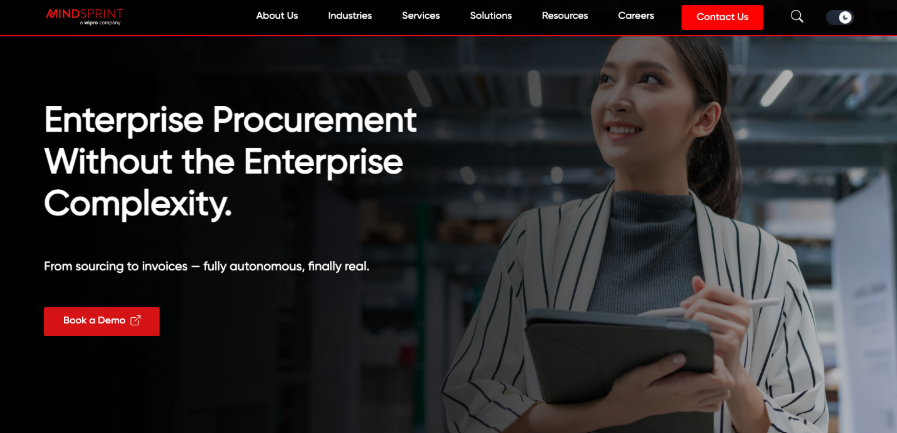 Procuresprint by Mindsprint homepage
Procuresprint automates the procurement side of P2P with AI agents for supplier onboarding, eSourcing, contracts, spend analysis, and the requisition-to-goods-receipt flow. Paired with SprintAP for invoice-to-pay, Mindsprint covers the entire purchase-to-pay cycle on one connected data layer. Both are ERP-agnostic, so they layer on top of what you already run rather than replacing it.
Key features
AI agents across sourcing, contracts, and PR-to-GRN
Supplier onboarding with risk screening on 520M+ records
Spend analysis and real-time visibility
Full invoice-to-pay via SprintAP's nine AI agents
API-first integration with SAP, Oracle, and others
Best suited for
Enterprises that want full-cycle P2P without a rip-and-replace, especially complex operations in manufacturing and food and agri. A strong fit when procurement and AP need to share one data flow.
Pros | Cons |
|---|---|
Covers both procurement and AP on one data layer | Newer entrant, smaller public review base |
ERP-agnostic, fast 2 to 3 month deployment | Industry depth strongest in industrial and trading sectors |
AI-first, not labor arbitrage | Best fit is enterprise, not small teams |
Built for complex, multi-entity operations |
Pricing: Custom Rating: New entrant
2. Coupa
Business spend management with strong P2P and a large network
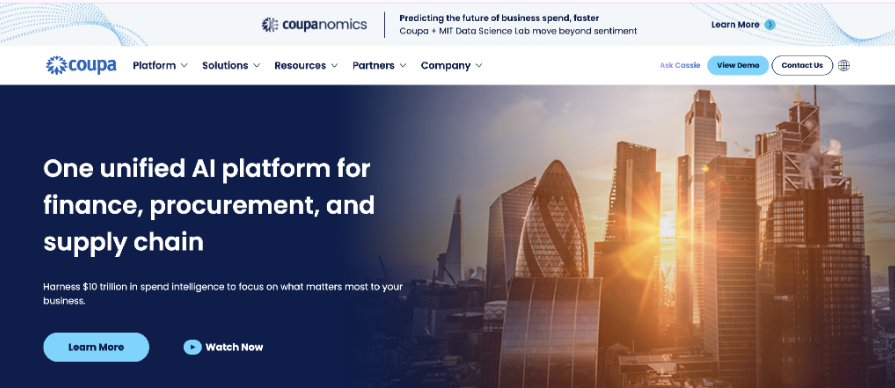 Coupa homepage
Coupa is a broad business spend management platform with strong purchase-to-pay, particularly for indirect spend. Its edge is ease of use, rapid deployment, and a large business network that feeds community benchmarking. For teams that prioritise adoption and indirect spend control, it is a natural fit.
Key features
Unified procurement, invoicing, and payments
Large supplier and spend network
Strong indirect spend management
Community benchmarking and AI insights
Good user experience
Best suited for
Enterprises focused on indirect spend and fast adoption that want one platform across procurement and AP with strong network effects.
Pros | Cons |
|---|---|
Excellent ease of use | Premium pricing |
Large business network | Deeper for indirect than direct spend |
Strong indirect spend | Heavier for very complex direct procurement |
Rapid deployment for the category |
Pricing: Premium, custom Rating: G2 4.2
3. SAP Ariba
Source-to-pay tightly integrated with the SAP ecosystem
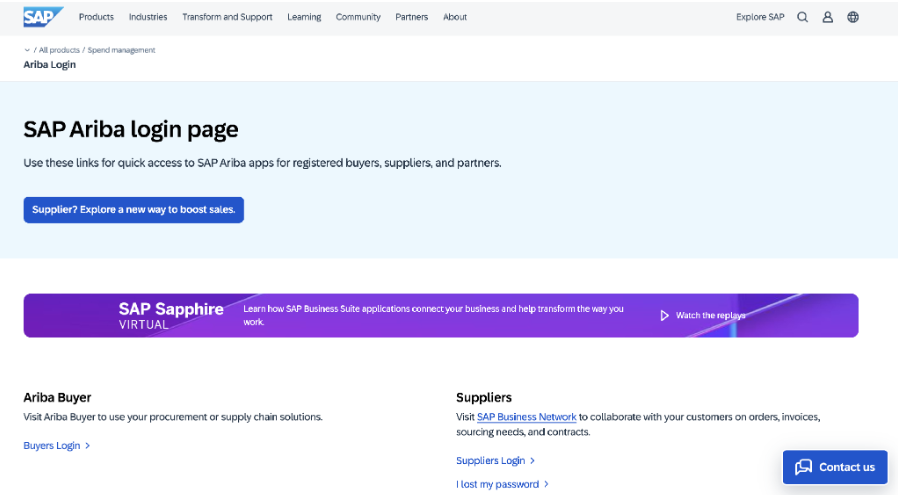 SAP Ariba homepage
SAP Ariba delivers procurement tightly integrated with SAP finance and supply chain, backed by the Ariba supplier network. For organisations already standardised on SAP, it is often the default choice, with the pull being ecosystem fit rather than best-in-class usability.
Key features
Deep SAP ERP integration
Ariba supplier network
Full source-to-pay coverage
Strong compliance and global scale
Supplier collaboration
Best suited for
Large enterprises already invested in SAP that value native integration and a global supplier network over standalone usability.
Pros | Cons |
|---|---|
Unmatched SAP integration | Complex setup and governance |
Large supplier network | Best value only inside SAP |
Enterprise scale and compliance | Usability trails newer platforms |
End-to-end S2P |
Pricing: Custom; often bundled with SAP Rating: G2 4.1
4. JAGGAER
Source-to-pay with standout purchase-to-pay execution
 JAGGAER homepage
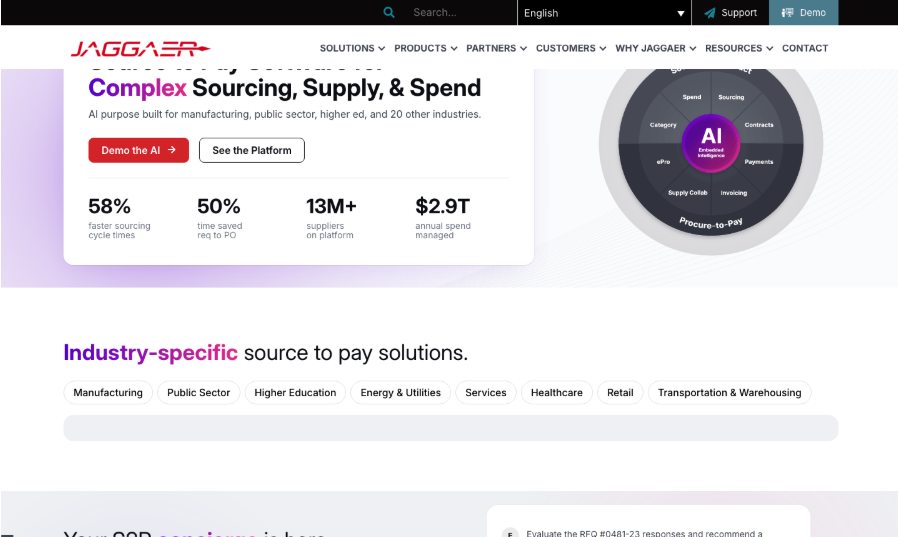
JAGGAER One is a source-to-pay suite that stands out specifically on P2P execution, where reviewers rate it well ahead of some larger rivals. It pairs strong direct and indirect procurement with fast time-to-value and an intuitive interface, which makes it a serious enterprise contender.
Key features
Strong purchase-to-pay execution
Direct and indirect procurement
AI-assisted sourcing and analytics
Fast implementation and intuitive dashboards
Industry-specific solutions
Best suited for
Enterprises, especially in manufacturing and complex direct-spend industries, that want strong P2P execution and quicker time-to-value than the heaviest suites.
Pros | Cons |
|---|---|
Top-rated P2P execution | Less brand presence than Coupa or SAP |
Faster time-to-value | Full-suite commitment |
Strong in direct procurement | Mid-market fit varies by module |
Good usability |
Pricing: Custom Rating: G2 4.3
5. GEP SMART
Unified P2P and procurement in one architecture
 GEP SMART homepage
GEP SMART combines purchase-to-pay with broader procurement in a single unified platform, giving end-to-end visibility from sourcing through to payment. Its strength is connecting spend insight directly to procurement action, and it scores well with mid-market reviewers on setup and support.
Key features
Unified P2P and source-to-pay
End-to-end visibility
AI-assisted classification and recommendations
Strong support and product direction
Single-architecture platform
Best suited for
Mid-market and enterprise teams that want one unified platform across procurement and P2P, with insight wired directly into action.
Pros | Cons |
|---|---|
Unified single architecture | Full-suite commitment |
Good setup and support scores | Less specialised than point tools |
Strong insight-to-action link | Rollout effort scales with scope |
Solid classification |
Pricing: Custom Rating: G2 4.2
6. Ivalua
Highly configurable source-to-pay with deep compliance
 Ivalua homepage
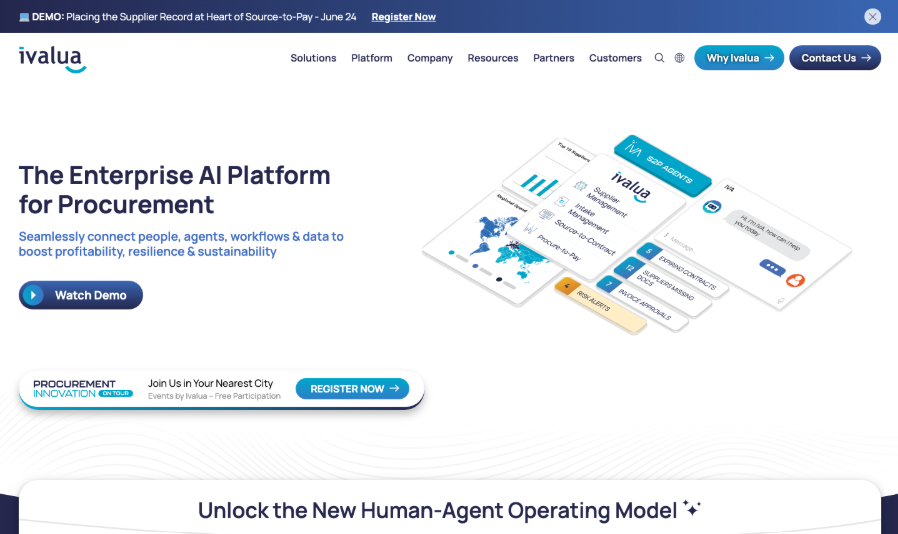
Ivalua is a complete, highly configurable source-to-pay platform with strong P2P. Its differentiator is depth: multi-tier supplier qualification, configurable approval workflows, continuous compliance monitoring, and audit trails are built into the core, which makes it a top pick for regulated industries.
Key features
Highly configurable P2P workflows
Advanced supplier qualification
Continuous compliance monitoring
Full source-to-pay coverage
AI-driven recommendations
Best suited for
Regulated enterprises, in healthcare, financial services, or regulated manufacturing, where procurement governance and audit traceability are non-negotiable.
Pros | Cons |
|---|---|
Unmatched configurability | Configurability adds implementation effort |
Deep compliance and audit | Full-suite scope and cost |
Complete S2P suite | Steeper learning curve |
Strong supplier qualification |
Pricing: Custom Rating: G2 4.3
7. Basware
Purchase-to-pay built on a global e-invoicing backbone
 Basware homepage
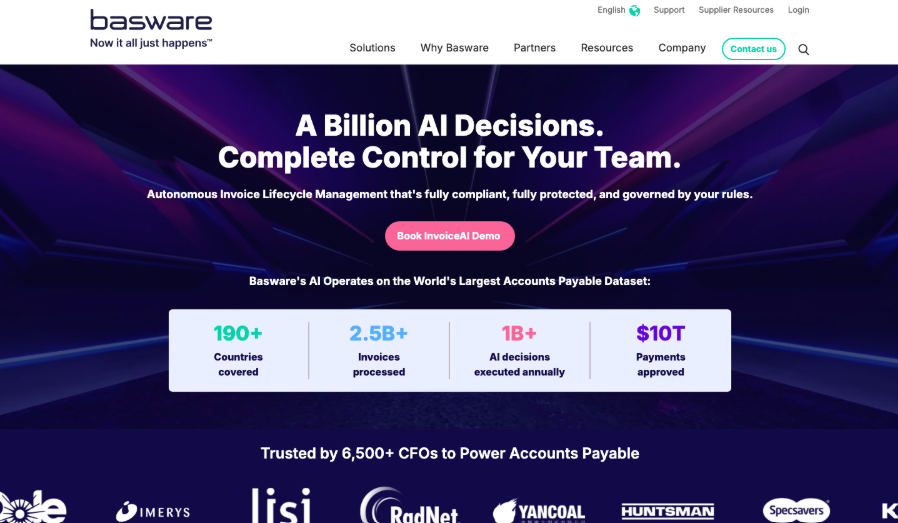
Basware is an enterprise P2P platform whose defining strength is its global e-invoicing network, letting enterprises transact electronically with suppliers worldwide while staying compliant with local mandates. Its AI is trained on billions of invoices, which helps capture accuracy across regions.
Key features
Global e-invoicing network
AI invoice capture at scale
P2P workflow automation
Supplier management
Analytics and spend visibility
Best suited for
Large multinationals with complex cross-border invoicing and strict e-invoicing compliance needs across many jurisdictions.
Pros | Cons |
|---|---|
Industry-leading e-invoicing | UX feels dated to some users |
Mature, enterprise-proven | Longer implementations |
Strong capture accuracy | Best value at very large scale |
Good multinational support |
Pricing: Custom Rating: G2 4.2
How to Choose the Right P2P Platform
The shortlist narrows fast once you match the platform to your situation.
If your priority is... | Start with |
|---|---|
Full-cycle P2P on your existing ERP, AI-first | Procuresprint by Mindsprint |
Indirect spend, ease of use, and network scale | Coupa |
Staying inside the SAP ecosystem | SAP Ariba |
Best pure P2P execution and fast value | JAGGAER |
A unified P2P and procurement platform | GEP SMART |
Configurability and regulated-industry compliance | Ivalua |
Global e-invoicing compliance at scale | Basware |
One practical note: full suites bring breadth but heavier rollouts, while AI-first platforms close the procurement-to-AP gap faster. If your real goal is connecting procurement and finance on one flow without a migration, an ERP-agnostic platform like Procuresprint plus SprintAP gets you there sooner, and it maps to how a modern CFO wants to run spend.
Automated, best-in-class teams process invoices in 3.1 days at $2.88 each, versus 17.4 days and $12.88 for manual peers.
Source: Ardent Partners, AP Metrics that Matter in 2025
Conclusion: Buy the P2P Flow That Fits Your Stack
There is no single best P2P procurement software, only the best fit for your ERP, your industry, and how much you want procurement and AP to share one workflow. Coupa owns indirect spend and ease of use, SAP Ariba owns the SAP ecosystem, JAGGAER owns P2P execution, Ivalua owns configurability, GEP owns unified breadth, and Basware owns e-invoicing.
If your priority is a connected, AI-first purchase-to-pay flow on the ERP you already run, Mindsprint's P2P platform covers procurement and AP together. Whichever way you lean, shortlist two or three, ask each for their real time-to-value, and pilot on your messiest categories, not their cleanest demo.